When planning a new entrance or replacing an existing one, understanding external door sizes is essential for achieving a perfect fit, optimal insulation, and a seamless finish. Front doors are available in a variety of standard and bespoke dimensions across the UK, but the right size can depend on your property type, the door material, and the frame construction.
This guide explains everything you need to know about standard front door sizes, how to measure accurately, and what to consider if your doorway doesn’t match a typical size — helping you make an informed choice for your next DOVISTA door system.
Are External Doors a Standard Size?
In the UK, external doors don’t follow one fixed size — but there are several standard dimensions commonly used by manufacturers and builders. The most typical front door size is 1981mm (height) × 762mm (width), though many modern homes now feature slightly wider doors at 838mm to improve accessibility and create a more impressive entrance.
Older properties may have narrower or shorter door openings, especially those built before uniform building standards were introduced. In these cases, a made-to-measure or custom-sized door is often required to ensure a proper fit and maintain thermal performance.
While many homeowners assume “standard” sizes apply universally, it’s important to note that door thickness, frame type, and threshold style can all influence the overall opening size. Understanding these small variations helps avoid installation issues and ensures your chosen external door performs as designed.
Common UK External Door Sizes
Although every home is different, most external doors in the UK are manufactured to a few key size ranges that suit common property types and frame designs. Understanding these measurements can help you choose the right replacement or plan for a new installation with confidence.
Standard Front Door Sizes
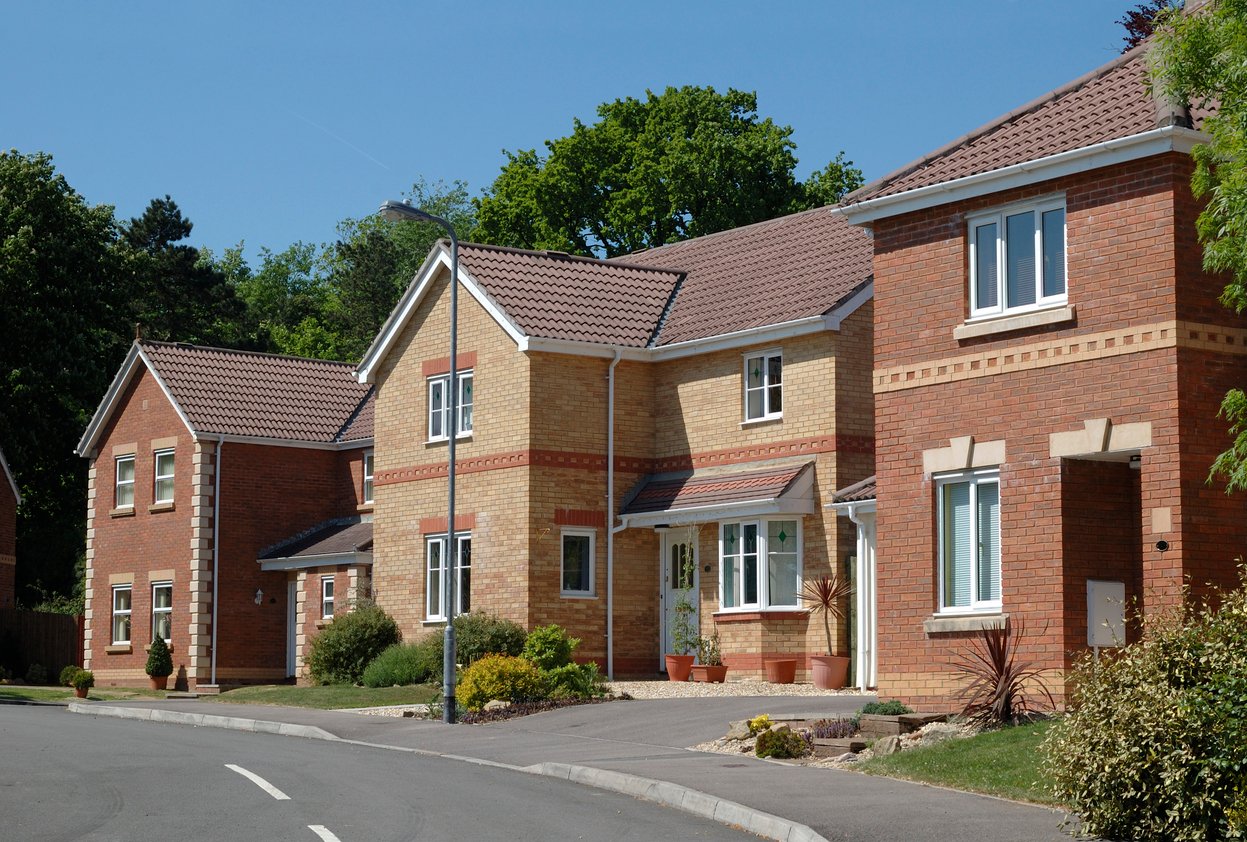
The majority of UK front doors are 1981mm high, with widths ranging from 762mm (30") to 838mm (33"). These are considered standard dimensions and are compatible with most new-build and replacement door frames. Some manufacturers also offer smaller widths (686mm) for older properties, or larger doors (914mm) to create a grander entrance or improve wheelchair accessibility.
Typical front door size chart:
|
Door Width |
Door Height |
Common Use |
|
686mm (27") |
1981mm (78") |
Older homes, narrow entrances |
|
762mm (30") |
1981mm (78") |
Standard UK front door |
|
838mm (33") |
1981mm (78") |
Wider openings, modern homes |
|
914mm (36") |
1981mm (78") |
Accessible or statement entrances |
Door thickness usually ranges between 40mm and 70mm, depending on the material — timber, aluminium, composite, or steel — and the level of insulation or security required.
French Door Sizes
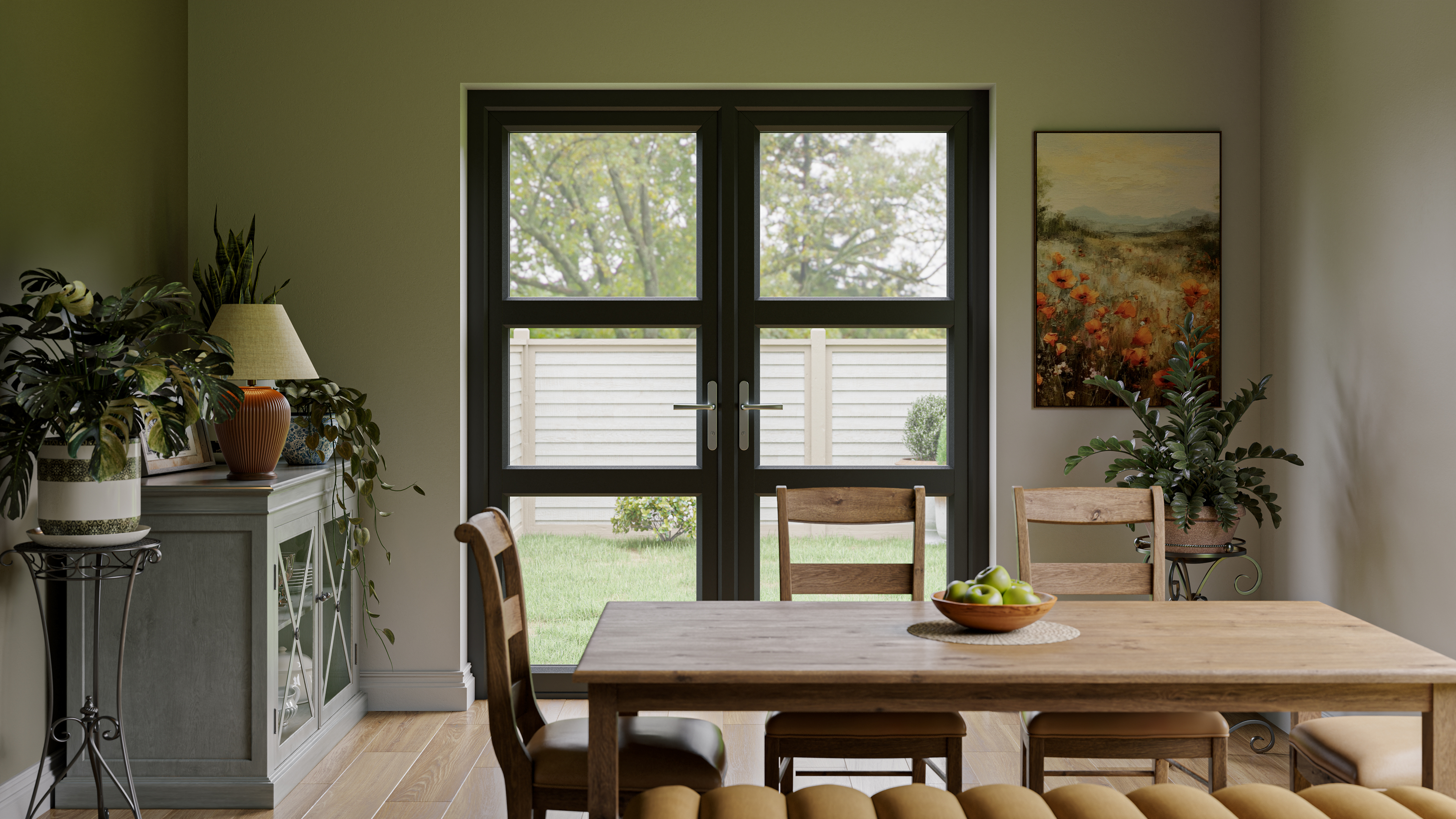
French doors — also known as double doors or hinged patio doors — are a popular choice for rear or side entrances, offering a classic look with plenty of natural light. Unlike single front doors, French doors are always installed as a pair of doors that open outwards or inwards, meaning their overall width is determined by the combined leaf sizes and central gap.
The most common size for a pair of French doors in the UK is 1200mm to 1800mm wide and 1981mm high, though larger sets up to 2100mm wide are available for properties with wider openings. Each individual door leaf is typically 600mm to 900mm wide, depending on the overall design.
If you’re replacing an existing set, always measure the total brick-to-brick opening rather than a single door leaf. For homes with non-standard openings or where symmetry is important, made-to-measure French doors are a popular option — especially when balancing period architecture with modern energy efficiency standards.
Patio Door and Sliding Door Sizes
Patio doors are designed to maximise glass area and natural light, making them a popular choice for modern homes and garden-facing rooms. The most common style — the sliding patio door — features large glazed panels that move smoothly on a track, creating a wide opening without taking up extra space indoors or outdoors.
Standard two-panel sliding patio doors in the UK typically measure 1790mm to 2390mm wide and 2090mm high. For homes with larger openings, three- and four-panel systems can reach widths of up to 4800mm while maintaining the same height. Each panel is usually between 900mm and 1200mm wide, depending on the frame thickness and track configuration.
When planning a new installation, it’s important to consider not just the size of the opening, but also the sightline width — the visible frame between glass panels. Slimmer sightlines allow for a larger glass area, improving views and natural light. For non-standard openings, DOVISTA’s modular door systems can be tailored to create a custom sliding configuration that fits perfectly.
Bifold Door Sizes
Bifold doors are one of the most flexible external door options available, combining large glazed panels with a space-saving folding mechanism that opens up entire walls to the outdoors. Their modular design means there’s no single standard size — instead, bifold doors are made up of multiple panels that can be configured to suit almost any opening.
In the UK, individual bifold door panels are typically between 700mm and 1000mm wide, and 2090mm high. This means a three-panel set would generally measure around 2100mm to 3000mm wide, while larger configurations of four, five or six panels can reach up to 6000mm.
Most manufacturers, including DOVISTA’s partners, offer made-to-measure bifold systems, allowing homeowners to adjust the overall width, number of panels, and opening direction to suit their layout. The flexibility of these designs makes them ideal for both new-build properties and renovation projects where maximising light and space is a priority.
Measuring for a New External Door
Whether you’re replacing an existing front door or installing a completely new system, accurate measurements are key to ensuring a perfect fit. Even small inaccuracies can lead to draughts, misaligned hinges, or difficulty closing the door properly. Taking the time to measure carefully helps your new external door perform as it should — secure, insulated, and effortless to use.
How to Measure Your Door Frame
To measure your doorway correctly:
- Measure the width – Take three measurements: across the top, middle, and bottom of the opening. Use the smallest of the three as your final width.
- Measure the height – Again, take three measurements: left side, centre, and right side. Use the smallest figure to ensure the new door will fit comfortably.
- Check the diagonals – Measure from corner to corner to confirm that the opening is square. If the measurements differ, your frame may need adjustment before fitting.
- Account for tolerances – Allow a fitting tolerance of around 5–10mm on all sides to make installation easier and accommodate sealing materials.
These steps apply whether you’re measuring for a single front door, French doors, or a wider patio or bifold system.
What If Your Door Isn’t a Standard Size?
It’s common for homes — particularly older or bespoke properties — to have non-standard door openings. In these cases, a made-to-measure external door is the best solution.
DOVISTA’s modular door systems can be tailored to fit almost any dimension, ensuring a precise installation without compromising on design, performance, or thermal efficiency. Custom sizing also allows greater flexibility with glazing, finishes, and accessibility options, making it easy to achieve a perfect match for your property.
Choosing the Right Door Size for Your Home
Selecting the correct door size is about more than just fitting the opening — it’s about ensuring comfort, accessibility, and efficiency for years to come. The right dimensions can enhance your home’s kerb appeal, improve energy performance, and make day-to-day access easier for all users.
When deciding on your new external door, consider the following:
- Design and proportions: The door should look balanced within the façade. Taller or wider openings can be complemented with sidelights or fanlights for extra natural light.
- Building regulations: According to Approved Document M of UK Building Regulations, the main entrance door of a new-build home should have a minimum clear opening width of 775mm to allow wheelchair access.
- Insulation and performance: A well-fitted door reduces heat loss and improves thermal comfort. Oversized or incorrectly fitted doors can create gaps that compromise efficiency.
- Security and durability: Ensure your chosen size and material work with multi-point locking systems and weather seals for long-term performance.
Balancing these practical and aesthetic factors will help you choose a door size that looks right, functions perfectly, and meets all relevant standards.
DOVISTA’s Range of External Door Solutions
At DOVISTA, we design and supply precision-engineered external door systems that balance modern design with long-lasting performance. Our door collection is tailored to suit a wide range of UK homes, from contemporary new builds to traditional suburban properties.
Whether you’re refreshing your front entrance or opening up a room to the garden with a sliding system, every DOVISTA door is available in a selection of custom sizes, glazing options, colours, and hardware — giving you complete freedom to create the right look and feel for your home.
Explore DOVISTA’s complete collection of:
- Front Doors
Choose from sleek Flush styles, characterful Panelled designs, or modern Glazed doors that welcome natural light into the home. All front doors are available with enhanced security features and a wide range of colours and hardware finishes. - Sliding Doors
Smooth-glide Single and Double Sliding doors designed to maximise daylight and create a seamless link between home and garden. Ideal for patios, dining spaces, and modern open-plan living.
Every DOVISTA door is manufactured with energy efficiency, security, comfort, and durability in mind — ensuring long-lasting performance through every season.
External Doors: FAQ's
What is the most common front door size in the UK?
The standard front door size in the UK is 1981mm high × 762mm wide. However, many modern homes now feature wider doors (838mm) to improve accessibility and visual impact.
Do door sizes include the frame?
No — the stated size of a door usually refers to the door leaf only, not the frame. The overall frame size will be slightly larger, so it’s important to measure the entire opening when ordering a replacement.
Can I replace a non-standard door with a standard size?
In some cases, yes — but only if the opening can be adjusted. For older properties or unique openings, a made-to-measure external door is usually the best option for achieving a perfect fit.
How much smaller should a door be than the opening?
As a general rule, allow a 5–10mm tolerance on each side of the door to ensure smooth installation and space for sealing.
What size should an accessible entrance door be?
To comply with Building Regulations Part M, the main entrance to a dwelling should provide a minimum clear opening width of 775mm, which typically means fitting a door at least 838mm wide.
What if my door frame isn’t square?
If your doorway is uneven or out of square, the best solution is a custom-made door. It ensures the new frame and door align perfectly, improving both appearance and insulation performance.